Google to Release AI Glasses Next Year
Holiday Ayo - Google and Samsung have officially announced their collaboration to launch artificial intelligence (AI)-based glasses in 2026.
Google is collaborating with Samsung and leading eyewear brands such as Gentle Monster and Warby Parker.
This collaboration aims to ensure the resulting device is technically advanced, lightweight, stylish, and comfortable for everyday use, according to Google.
Google will develop two distinct categories of AI glasses to meet diverse market needs. The first category is screen-free AI glasses.
This variant will be equipped with integrated audio-visual components, including a speaker, microphone, and camera.
The main focus of this screen-free variant is to provide a natural interaction experience. Users will be able to interact directly with the Gemini AI assistant, take photos, and receive voice assistance without the visual distraction of the glasses' lenses.
Meanwhile, the second category is AI glasses with a screen or display. This variant offers more complex technology by embedding a display within the lens.
According to Google, the screen is designed to display crucial information privately and in real-time when users need it.
Some of the flagship features prepared for this variant include "turn-by-turn" navigation and a translation feature that appears directly in front of the user's eyes.
Google emphasizes that both types of glasses are ergonomically designed for all-day comfort, in line with the company's philosophy that one device form factor doesn't fit all.
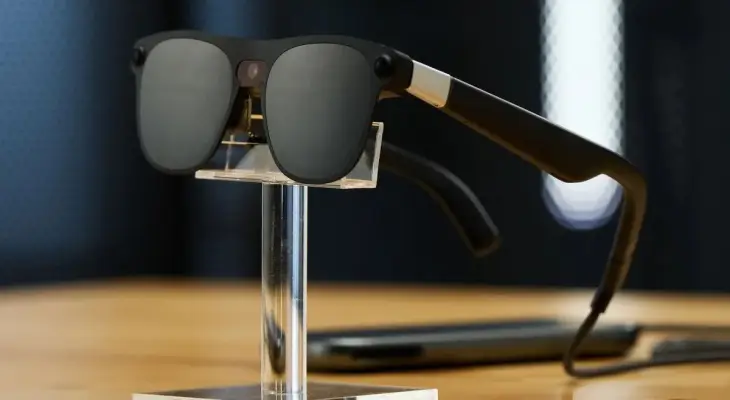
In addition to wireless devices, Google also plans to open a new market segment with the Wired XR Glasses category next year.
This device is claimed to offer a unique blend of VR headset-like immersion and the portability of regular glasses.
As an initial step in market penetration in this category, Google showcased "Project Aura" from XREAL, which is billed as the first Android XR device in this segment.
Project Aura is said to have a 70-degree field of view and utilizes optical see-through technology.
This technology allows digital content such as dual app windows or visual guides to be overlayed directly on top of the user's real-world view.
In practical use cases, Google suggests the device could be used to display repair guides for household appliances that appear to be visually anchored to the actual object, or to assist with cooking by displaying digital recipes.








Leave a comment