5 Unique West Java Traditional Houses

Holiday Ayo - Indonesia is famous for its diversity of tribes and customs, don't be surprised if you will find many unique houses in each area, this time we will discuss houses in Java. Of the many traditional houses in Indonesia, there is one that is interesting, namely the traditional house of West Java.
In general, Cited from IDN TImes West Java traditional houses have different shapes and names according to the region. This means, there are special features in each type of traditional house. Well, if you want to know the type of traditional house in West Java, see the full review below.
1. Traditional House of Kasepuhan Cirebon
The traditional house of Kasepuhan Cirebon is the most popular traditional house in West Java. The uniqueness of this traditional house lies in the number of rooms which are divided into four parts. There is a Jinem or pavilion for the royal courtiers. Pringgodani or the place to give orders to the duke. Then, there is Prabayasa as a special living room, work space, and the sultan's rest.
2. The traditional house of Suhunan Jolopong
Source : Polarumah.com
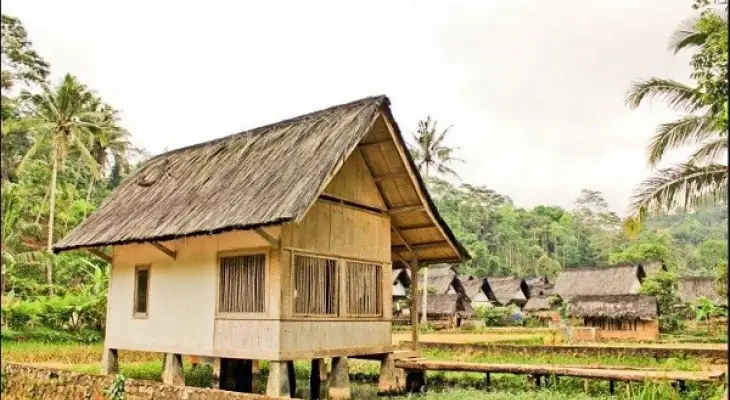
In Sundanese terms, Jolopong means lying straight. Suhunan Jolopong is also known as Suhunan Panjang. The uniqueness of this traditional house lies in its quite old shape. In fact, there is a roof of a saung building which is thought to be of an old shape.
3. Dog Tagog Traditional House
Quite unique, the traditional Dog Tagog house has a roof shape resembling a sitting dog, you know! In fact, this view is a camouflage of two roof planes bordering the tribal trunk line. The bottom side of this house is not supported by poles.
4. Heuay Rhino Traditional House
The Badak Heuay Traditional House is almost similar to the Dog Tagog Traditional House. This house has a roof plane that crosses the stem of the Suhunan, which is called the hair. Therefore, the shape of this house resembles a gaping-mouthed rhino
5. Parahu Kumureb Traditional House
Next, there is the Parahu Kumureb Traditional House. This house consists of four trapezoidal roofs. In the form of the jubleg nangkub roof, there are two jure (wooden rods that connect the ends of the Suhunan with the corners of the house) which are gently triangular in shape. When viewed from the side, it looks like a boat on its stomach.





Leave a comment